What can we learn from Projects in the United States?

A Report of a visit to the US to gather information on Teacher-Scientist Partnerships


The Teacher Scientist Network

The Teacher Scientist Network (TSN) is a group of teachers and scientists linked together in working partnerships throughout the Norfolk (UK) area.

At this time there are ~80 teachers of science (from all school phases) that belong, and over 70 academic and industrial scientists. The network is overseen by a steering group of practising teachers and scientists, and is funded by the Gatsby Charitable Foundation.
The Teacher Scientist Network
John Innes Centre
Norwich Research Park,
Colney
Norwich NR4 7UH
Tel +44 (0)1603 452571
Fax +44 (0)1603 451704

F Chennell (TSN co-ordinator), Co-ordinator:
Frank Chennell
Hurdle Cottage,
Brisley Road, North Elmham NR20 5DL
Tel/Fax +44 (0)1362
668 337
Email: frank.chennell@bbsrc.ac.uk

Steering Group:
C Bennett (teacher, primary phase),
J Cheall (teacher, primary phase),
C Crawford (teacher, secondary phase)
P Dark (teacher, secondary phase),
D Hart (scientist),
S Hayman (middle school teacher),
R Price (observer),
K Roberts (scientist),
W Sutherland (scientist),
C Webb (teacher, secondary phase)

For further information please contact the Co-ordinator.

Contents

Introduction

Objectives

Itinerary & Team

Findings

The Case for Partnerships

Principle Features of American Partnerships

Outcomes of Partnership Activity

Lessons learned

Conclusions

Acknowledgements

References

Appendix A: American Terminology

Appendix B: Partnership Schemes Visited


INTRODUCTION

The Teacher Scientist Network (TSN) began in Norfolk in June 1994 modelled upon the Science and Health Education Partnerships (SEP) that began in San Francisco 1987. Information from this and similar projects (Sussman 1993) proved very helpful in the initial stages of TSN.

Two years on from TSN's beginnings, a number of issues had arisen that suggested the TSN might need to expand its activities and styles of partnership, e.g. the provision of training for scientists and teachers, the involvement of other institutions and industry, and the possibility of increasing communication amongst its members by, for example, electronic mail. It seemed sensible once more to tap into the experience of our American colleagues, this time by a small and representative TSN delegation visiting the US to meet directly with those engaged in the wide range of partnership schemes that now exists. Prof. Bruce Alberts, President of the National Academy of Sciences, kindly offered his offices to arrange an effective itinerary, and The Gatsby Foundation funded the visit.

This report is a distillation of information gathered from meetings with project representatives and associated documents. It lists general outcomes and lessons learned from experience gained over the past 9 years or so, and in Appendix B it lists the many relevant projects seen, describing briefy their organisational structure and range of activities.

Objectives

The purpose of the TSN visit was to gather all relevant information about American schemes involving partnerships between the educational sector and the scientific, industrial and academic communities. Specifically, the delegation sought information related to the following questions:

Partnerships

Scientists

Teachers

Network management

Other Activities

Itinerary & Team

The visit took place from 26 March - 4 April 1996. The full team began its visit in Washington DC, meeting representatives from a range of institutions and remained there until 30 March. It then divided with individuals visiting respectively Baton Rouge and its locality, Madison and its locality, and the San Francisco Bay area.

Members of delegation:

Carol Bennett, Teacher representing primary phase
(Visited Washington DC and Madison, Wisconsin)

Frank Chennell, TSN Co-ordinator
(Visited Washington DC and San Francisco)

Keith Roberts, Scientist, Chair of Steering Group
(Visited Washington DC)

Chris Webb, Teacher representing Secondary Phase
(Visited Washington DC and Baton Rouge, Louisiana)

Findings

The Case for Partnerships

The scientific and the educational communities working together provide a powerful stimulus for science curriculum reform and unique support for its implementation.

Science teaching and learning in the United States, particularly in elementary schools, has been patchy in quantity and in quality. Teaching has tended to be didactic with little practical or investigative learning with few materials and little curriculum guidance from administrative levels of education. Many American collaborative initiatives arose from the drive for systemic reform of school science; for more hands-on, inquiry-based science delivered in an appropriate context for all children.

The National Science Education Standards (1996) articulates the purpose of science for all school children and sets comprehensive guidelines for its delivery and support. Many collaborative initiatives relate to these standards, or local variants of them, and seek to generate activity which is within the Standards framework. Nevertheless, there remains great scope for flexibility and freedom for participants to meet local needs and conditions in whatever contexts and programmes of delivery that suit. A K-8 project on the West Coast for example, exposes a whole school for a week of Marine Science that involves a range of hands-on science and a number of other cross-curricular experiences all geared to the ocean. A curriculum project in Louisiana centres its science on experiences and investigations using the vast forestry resources there.

American partnerships-collaborative effort between those at all levels in the education establishment and others in the world beyond-have generated imaginative, new and locally relevant hands-on science for school children, with the necessary support and professional development for teachers.

In the UK we have the National Curriculum. Although it is possible to deliver national curriculum science within a variety of contexts, its tightly prescriptive nature, its detailed content and its confined assessment demand can inhibit the range of experiences and contexts of delivery that many American teachers now enjoy. Although British teachers are likely to ?find it difficult to engage National Curriculum Science with similar contexts and styles that seize children's interest and imagination, it is achievable given the right support and resources.

Learning from pertinent American experience, partnerships between the British education and science communities will be well-placed to help with such support and resources for British teachers of science.

Principle Features of American Partnerships

There are many forms of partnerships and networks ranging from individual teachers partnered with a single scientist, to partnered teams of teachers and scientists, to partnerships between industry and national educational organisations. Often there is a network of multi-layered partnership activity; within a large partnership between institutions there are usually teams of scientists and teachers working together, as well as individual partnerships. Partnerships between large organisations will have negotiated goals, last for an agreed period and often involve sponsorship and funding agreements. Individual partnerships on the other hand tend to be informal with a free agenda, and range from one-off meetings to long standing relationships of many years.

There are two common styles of partnership at all levels:

Top down-where one partner is the major benefactor in the sense that information and resources flows from the benefactor to the recipient. Usually, the information and resources offered are non-negotiable, and sometimes self-serving. Sometimes the cost of the project in terms of time and cash value of resources is not matched by its utility to the recipient, with the likelihood that neither partner gains.

Collaborative-where both partners work together towards an agreed common goal, and information and resources are exchanged between partners. Although the cash value involved is usually small, the service value of this two-way flow is likely to be high, with both partners gaining.

Outcomes of Partnership Activity

Those involved directly in the management of teachers and scientists working together listed the following outcomes, some of which were quite unexpected.

1 A large increase of teacher to teacher collaboration between schools.

Although an increase in teacher to teacher collaboration within the same school is to be expected, it is quite noticeable that after teacher-scientist collaboration, teachers from different schools more readily interact and work together.

2 Increased time allocated to elementary school science.

One district reported an increase from an average of 10-20 minutes a week to 1-3 hours a week.

3 More hands-on science activity in classrooms.

With the availability of appropriate teacher support and resources teachers are able to supply, and feel confident to manage, practical hands-on classroom science activity.

4 More up-to-date science knowledge and a greater variety of classroom and ?field activity.

Information and ideas from the scientist partner brought fresh, up-to-date science and contexts into the classroom and beyond, either directly or via the teacher partner.

5 Teachers become more enthusiastic about science and science education.

Elementary school teachers who often felt insecure or inadequate because of their scanty scientific training gained confidence and enthusiasm for classroom science.

6 Long lasting one-to-one partnerships often arise spontaneously from teamwork activity.

A number of individual partnerships have arisen as a result of teacher-scientist interactions within set collaborative programmes. Several of these in the San Francisco Bay area have lasted 7 or 8 years.

7 Scientists gain as well as teachers.

How partnerships benefit scientists is not obvious at ?first, but once they begin to work with teachers and children they begin to list the gains. Some that have been mentioned are:

'It is therapeutic to get into the local community.'
'It is refreshing to think wide instead of narrow.'
'The payoff in labs is long-term, but in schools it is quick, there is immediate feedback.'
'It encourages us to review the purposes of our work', and
'It improves our communication skills.'

The Catalyst (newsletter of SEP) devotes its Summer 1996 edition to this topic.

8 A small number of participants change career.

Sometimes collaborative work results in one of the partners switching careers. This is infrequent but, when it takes place, it is more likely to be a scientist changing to an educational career than a teacher changing to a scientific career.

9 Time spent by young scientists on partnership activity can be detrimental to their careers.

Some employers do not recognise collaborative work with teachers as productive, and their employee's careers may be held back.

More employers are now recognising that a scientist's contribution is valuable and will include it into his/her Performance and Personal Development Revue.

10 Kit-based curriculum packages that focus on societal issues are particularly successful

When partners work together use their professional skills by addressing social issues - e.g. toxic waste or food additives-as the context for a science kit-based package, partnership 'job satisfaction' has been high as well as the ?final product being well-received.

11 Scientific community's esteem of teachers is increased.

After scientists and industrialists have been actively involved in education, they are more supportive and understanding, sometimes resulting in scientists taking on the role of political advocate within the local community.

12 A key measure in evaluation of partnership activity is how well scientist's activity meshes with school objectives.

A scientist's contribution to education may be successful in the sense that the activity took place as planned, ran smoothly, was engaging and well-received by the students, but if it does not engage with the school's set goals its value is limited. (An example of this would be an interesting and well-delivered lecture that entertained but did not help move children along their curriculum path.)

13 Intensive individual partnership activity is being replaced by programme-oriented activity involving teachers and scientists.

Managing and nurturing many one-to-one partnerships occupied in different activities can be time-consuming and expensive. Many projects now concentrate upon developing collaboration between scientists and teachers that is related to a specific programme - e.g. creating curriculum material, kit-based resources, or teacher professional development. Often this involves partnering teams of teachers and scientists rather than individuals, although individual partnerships often arise from this work.

14 Resource centres and related twilight workshops (kit clubs) are widely taken up and appreciated.

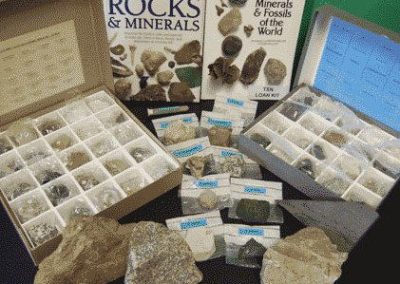
One of the most visibly successful outcomes of partnership work is the establishment of resource centres where teachers and scientists may borrow units of specific curriculum material (notes, equipment, samples) to use in school. These units sometimes have attached training sessions (kit clubs) for inexperienced teachers who wish to use them run by the teachers and scientists who have produced them.

A survey of nearly a thousand teachers in the Mid Peninsula Science Collaborative (page 25) indicates very strong support for kit-based science units, and the involvement of scientist partners.

15 Use of e-mail within networks is very valuable.

E-mail facilities and access to science and education bulletin boards such as Access Excellence reduces the isolation of teachers, and encourages them to interact more with one another and with scientists.

16 Drive for the wider involvement of community, including parents.

Many partnerships at institutional level are beginning to involve parents. This could be by asking them to help with a science fair, or to help organise science family evenings, or including them in the design and decision mechanisms of collaborative work with schools.

Lessons learned

1 Talks/lectures by scientists to schools are often ineffective and costly.

With the exception of talks about health by health professionals, one-off talks and lectures to school children by scientists, however well-delivered, are usually the least effective of all possible activities. They are time-consuming to organise unless automatically managed with computer databases, and usually fail to address the school's main curriculum requirements. However, they are seldom disappointing, mainly because expectations are quite low. They can be used effectively as an entry point into other partnership schemes.

2 Internships for teachers

This is a popular activity offered my many industries and universities as an element of a partnership arrangement. Experience has shown that it is difficult to attract applicants (teachers are often unwilling to lose holiday time, and sometimes inhibited by their own perceived ignorance). They are costly, and the benefits are unclear. The teacher's experience is usually not transferable to his/her classroom situations. Internships are sometimes taken up by teachers who see them as a route to a change in career.

There was a clear message that it is better to use the money and resources to support in-school activity, e.g. mini-grants to support individual partnerships, workshops, or kit grants. Many projects have now scrapped the internship idea.

3 Uncertainties and suspicions

Many teachers are suspicious and apprehensive of working with scientists initially; they are worried that scientists will make judgements about their competence level in science. This is especially true for high school science teachers who normally will have had science training and are potentially more sensitive about such judgements. Equally, scientists are nervous about working with teachers, especially when in the classroom. They doubt their ability to cope with children, their ability to communicate appropriately with them, and their understanding of the school curriculum and the mores of classroom practice.

Although these worries quickly disappear when partners begin working together, proper induction procedures can help dispel them.

4 Personal empathy in partnerships

Really successful partnership activity takes place when the individuals involved are compatible at a personal level. By the same token uninspiring or failing partnerships are usually more to do with poor personal understanding and inadequate communication between individuals than with practical consideration such as localities or time commitments. There seems little that can be done about this beyond supplying good induction, and it is to be expected that a proportion of partnerships will founder.

5 Induction

Good induction will help dispel fears and worries of inadequacy. Advice on surprisingly simple things like how and when to contact each other is also important. Most important is making sure that each side of the partnership understands and addresses the expectations of the other, and to ensure there is clear understanding and agreement of the purpose of the partnership and of each person's role within it.

6 Teachers' professional development

Partnership activity at all levels is likely to be more successful when it includes-or is directed towards-involving scientists in teacher professional development. This is further enhanced when it is linked with teacher accreditation.

7 Scientist's training

Scientists appreciate help in coming to terms with the educational environment-usually through seminars or workshops sessions involving teachers.

8 Size of networks

Although it is not clear what the optimum size for a network is, networks of individual partnerships should not be too big; they are too dif?cult to manage, support and monitor. It is better to have several small networks than one or two large ones. Although monitoring of partnerships is important, in practice it is dif?cult to undertake comprehensively within large networks and many now no longer attempt to undertake long-term nurturing of partnerships. Because half-hearted partnership commitment is almost certain to fail, it is better to have a smaller, but selective entry into the network.

9 Isolated partnerships

An isolated partnership, perhaps individually set up ad hoc, or as an element of a non-communicating group of partnerships, often results in the scientist feeling undervalued and under-used, and the teacher unclear of the scientist's role.

10 Titles

Descriptors such as 'mentor' or 'advisor' attached to scientist partners discourage genuine collaborative work; partnerships work best when it is perceived as a partnership of equal, but different, expertise.

11 Partnership manuals

Publishing 'How-to' manuals on individual partnerships is not a good idea, they tend to be slavishly followed and encourage stylised activity, and partnerships work better when they develop their own characteristics. However, booklets of ideas and representative case studies are useful starting points. Factual information on curriculum, school structures, educational terms and 'survival' hints is also useful.

12 Goals

Scientists ?nd it more rewarding when working in a wider perspective than their normal narrow ?eld (some schemes deliberately put scientists in partnerships that have a focus outside their immediate speciality). A good partnership focus is when the working context is beyond the expertise of both partners, (e.g. ensuring gender equity in the science programme, or developing a science unit that has as its context a particular environmental or social issue). The goal should be achievable, relevant to the current curriculum and of personal interest to both partners.

13 Key points for a successful partnership

Conclusions

The information gathered during the visit has clear implications for the UK, but there are three fundamental differences between the American and British scenarios that need to be taken into account. These differences render the present purpose of partnership activity in each of the two countries quite different.

1 A strong feature of American partnership activity is to lobby for successful systemic reform of science education. This has been possible because American schools have considerable freedom in designing science curricula and in developing suitable styles of delivery. In contrast, British schools experience tight central control over curriculum and assessment. This, together with ever-mounting pressure for teachers to adopt uniformly formal teaching styles and practices, and the many enforced changes in education that they have endured in recent years, generates a climate that-for all the inadequacies of the present system-asks for a period of stability and support. With the present moratorium on the current national curriculum, the central purpose of UK partnership activity is therefore likely to be confined to supporting and enhancing what is already established.

Nonetheless, the present system will be revised sooner or later, and the current period of stability should not pass without deciding what changes will need to be made. It was suggested several times during the visit that the science community, through its many associations and establishment links, and with the collaboration of teachers could, at the right time, act as a powerful lobby for science education reform in this country, and could become a political advocate for its teachers at local and at national levels.

2 Expectations of American science teachers are now much higher, and American reformers realise they must not forget the need for adequate support and training when they ask for curriculum changes.

3 Funding levels for partnership programmes in the US are very much higher than in the UK.

In spite of these major differences, many of the lessons learned in the US over the last decade of partnerships should enable the TSN to be more confident of success when planning new activities and when adapting what is already established. Acting cautiously upon this information should enable the TSN and others to avoid several years of trial and uncertainty.

________________________________

Acknowledgements

Many thanks are due to the following people, whose willing help made the visit so useful.

Prof. Bruce Alberts, President, National Academy of Sciences, Washington DC

Mrs. Betty Alberts, San Francisco

Prof. Robert Bloodgood, Dept of Cell Biology, University of Virginia and ASCB Outreach Program Co-ordinator

Dr. Robert Bohanan, Environmental Co-ordinator, Teacher Enhancement Prog. in Biology, Univ. of Wisconsin, Madison

Nancy Booth, Director, Adult Role Models in Science Project, Madison

Karin Borgh, Executive Director, OTCI, Madison

Dr Susan Brady, Biology Education Program, Lawrence Hall of Science, Berkeley

Gaile Burchill, Assistant Director, Wisconsin Academy of Science, Co-ordinator of FEST

Morita Carol, Genentech, South San Francisco

Dr. Amy Chang, Director, American Society for Microbiology Washington DC

Liesl Chatman, Executive Director, Science and Health Education Partnership, University of California, San Francisco

Ines Cifuentes, Program Director, Carnegie Institution of Washington

Dr Margaret Clark, Director, Science and Health Education Partnership, University of California, San Francisco

Linda Fienberg, Program Administrator, Carnegie Institution of Washington

Ella Garcia, Admin., National Academy of Sciences, Washington DC

Lilian Gilchrist, Outreach Specialist, University of Wisconsin, Madison

Susan Hymel, Community Partnerships Co-ordinator, Baton Rouge

Shannon Lalor, Program Manager, Exploratorium, San Francisco

Douglas Lapp, Executive Director, National Resources Centre, Smithsonian Institution, Washington DC

Jacqueline Lee, Class teacher, Ross Elementary School Washington DC

LeRoy Lee, Executive Director, Wisconsin Academy of Science

Kathryn Lee, Science Teacher, John Muir Elementary School, Madison

Myers Elementary School, Washington, DC

Sheila Nolte, Teacher, Hi-Mount Elementary School, Milwaukee

José Rios, Outreach Specialist, Summer Science Institute, University of Wisconsin, Madison

Ted Schultz, American Physical Society, MD

Geo. Teeter, Program Manager, Genentech, South San Francisco

Nancy Thomas, Contributions Manager, Hewlett-Packard Company, Palo Alto

Jan Tuomi, Director, Regional Initiatives in Science Education, NRC, Washington DC


References

Alberts B, Visions and Strategy in Science Education Reform, AAAS Keynote Speech 1995

Alberts B M, Elementary Science Education in The United States: how Scientists can help, Current Biology 1, 339-341 1991

Angeline K, The Struggle for Solutions: Stories from Wisconsin Business-Education Partnerships, The Wisconsin Academy of Sciences Arts and Letters 1993

Benchmarks for Science Literacy, American Association for the Advancement of Science, OUP 1993

CASE, Carnegie Academy for Science Education Summer institute, Carnegie institution of Washington

Catalyst, Quarterly Newsletter of RISE, National Research Council

Eckelmeyer K H (Editor), Science Education in Our Elementary Schools: a Guide for Technical Professionals who want to help, Sandia National Laboratories, Alberqurque 1994

Eckelmeyer K H (Editor), Preparing and Presenting Effective K-12 Science and Math Education Activities, Sandia National Laboratories, Alberqurque 1994

Issues in Science Teaching, Proceedings of the 1995 ASE InSET Services Annual Conference, Association for Science Education 1996

Keogh B & S Naylor, Scientists and Primary Schools; a Practical Guide, Biotechnology and Biological Science Research Council 1996

Kreuzner H & A Massey, Recombinant DNA and Biotechnology: a Guide for Teachers, ASM Press, Washington DC 1996

A Look at Industry and Community Commitment to Educational Systemic Reform, The Outcomes of a Survey of Industrial and Community involvement in Educational Systemic Reform Undertaken 1994-95, The Triangle Coalition for Science and Technology Education 1996

Millar R, Towards a Science Curriculum for Public Understanding of Science, School Science Review 77, 7-18 1996

NAPE, Annual Report of National Association of Partners in Education, inc., Nape, Alexandria, Virginia 1995

National Science Education Standards, National Academy Press 1996

Orientation Handbook for Volunteers in Science Education, 8th Edition, American Society for Microbiology, Washington DC 1996

Partners in K-12 Science Education Reform, Booklet on Levels of involvement in Systemic Reform, Sigma Xi, The Scienti?c Research Society

Project Learning Tree (A), Environmental Education Activity Guide (for Pre-K - 8 Teachers), American Forest Foundation Washington, DC

Project Learning Tree (B), Exploring Environmental Issues: Focus on forests (for Secondary Level Teachers), American Forest Foundation Washington, DC

Science & Technology in Schools Vol. 1, House of Commons Education Committee, Fourth Report 1994-95, HMSO 1995

Science for all Americans, American Association for the Advancement of Science, OUP 1990

Scientists, Educators and National Standards: Action at the Local Level 1994, Forum Proceedings April 14-15 1994, Sigma Xi, The Scienti?c Research Society

SEP Newsletter, Quarterly Newsletter of SEP, Science and Health Education Partnership UCSF

Sourcebook 1996, Sourcebook for Workshop on Systemic Reform of Elementary Science Education, American Physical Society

Sussman A (Editor) 1993, Science Education Partnerships: Manual for Scientists and K-12 Teachers, UCSF

Systemic Reform in K-12 Science Education, Booklet on Systemic Reform Towards Scienti?c Literacy, Sigma Xi, The Scienti?c Research Society

The National Curriculum, Department for Education, HMSO 1995

Tuomi J, Teachers: the Vision Supported, Sigma Xi, The Scienti?c Research Society Forum Proceedings 1994 36-38


Appendix A

American Terminology

A number of American educational terms that are used in the document may need clarifying.
Term UK Meaning
Elementary School Roughly equivalent to British primary and middle schools.
Hands-on science All practical school science work including investigative work.
Inquiry-based science Investigative science work similar to British science national curriculum attainment target 1 (Sc1).
Internship Fellowship: teachers spending time in industry or a laboratory. Usually a stipend is paid and takes place during the summer holiday.
K-12 K-12 means all school age children. The age range grading system for school children. K = kindergarten (~age 5), then yearly increase of grades to 12 (at age ~17)
National Standards A set of widely accepted guidelines for systemic reform in science education. 'National Science Education Standards' National Academy Press, Washington, 1996.
Public School State school
School District or 'District' Similar to the British Local Educational Authority (LEA)
Students School children of any age. In UK 'students' is usually used in tertiary education.
Systemic reform Reform aimed at the totality of the educational establishment; policies, practices, personnel and all supporting structures. (e.g. teachers, administrators, parents, local politicians, industrial, academic and community representatives, the curriculum, teacher and headteacher professional development, necessary resources and materials)


Appendix B

Partnership Schemes Visited

Between them, the four delegates talked with a wide variety of representatives from institutions engaged in collaborative teacher-scientist work.

The following is a list in alphabetical order of the most pertinent of these institutions, a brief outline of their partnership activities together with the names of the key representatives met.

American Society for Microbiology (ASM)

The ASM through its Board of Education and Training takes part in the science reform movement by encouraging its members to make themselves available-on a regular basis-to science teachers and students in their locality. The board believes that such activity will promote excellence in science education, encourage greater interest in life science careers and significantly enhance science education. It has produced a handbook for such volunteers (Orientation Handbook for Volunteers in Science Education, 1996) with suggestions and ideas for involvement.

Office of Education and Training
American Society for Microbiology
1325 Massachusetts Ave., NW
Washington DC 20005
Tel. 202- 942-9299 Amy Chang (Director, Education and Training)

ARMS (Adult Role Models in Science) Project

Established in 1990, ARMS is a continuing and developing 4-way partnership between:

Kiwanis Club of Downtown Madison, Wisconsin (which provides volunteers and money for equipment); The Madison Children's Museum (which provides hands-on science activities for parents and children); The Madison Metropolitan School District (which institutionalises the programme in schools, provides release time for lead teachers and works with parent-teacher organisations to enhance the scheme) and
The University of Wisconsin, Madison Centre for Biology (which provides teacher enhancement programs and evaluation programs to monitor student outcomes).

Objectives:

To establish science education as a priority in the elementary classroom.

To develop the skills of a classroom teacher to become a leader in science education for each school.

To enhance science education through volunteer involvement as role models

Adult Role Models in Science Project
Kiwanis Club of Downtown Madison,

5317 Retana Drive
Madison WI 53714
Tel. 221-0485 Nancy Booth (Former Co-ordinator)

Biopharmaceutical Technology Centre Institute (BTCI)

(A partnership between Madison Area Technical College and University of Wisconsin)

BTCI is run exclusively for educational, scienti?c and cultural purposes. Specific programmes are funded by NSF. Among its aims are:-
To promote the exchange of scienti?c, educational and cultural information between industry, educators and the general public, and to facilitate and co-ordinate programmes for children and young adults related to science, technology, and the arts.

BTCI Programmes include:

Frontiers in Science
Saturday morning programme run by scientists giving high school students opportunities to explore career options. A primary goal is to encourage the sharing of experiences and ideas between students and researchers.

Youth Apprenticeship Programme in Biotechnology
Administered by the Department of Industry, Labour and Human Relations in close partnership with BTCI and Madison Area Technical College. Aims to give high school students lab courses and experiences in biotechnology alongside regular school. Majority funding is from NSF. Students spend approximately half their day in high school as well as attending weekly lab courses and spending 10-15 hours per week as a paid apprentice in an industry or university lab. A scientist who is also a CertEd high school biology teacher leads the senior lab courses, a high school teacher and Access Excellence participant leads the juniors.
Biopharmaceutical Technology Centre Institute (BTCI)
5445 East Cheryl Parkway
Madison W1 53711

Karen Borgh (Executive Director)

Carniege Academy for Science Education (CASE)

(Under the auspices of The Carnage Institution of Washington)

The Institution is helping to increase scienti?c literacy through public education. At school level, it runs a Saturday Science Programme for elementary school students, a free science lecture series and opportunities for high school students to learn about scienti?c careers from leading scientists.

For elementary school teachers, CASE runs a 'Summer Institute' where scientists and expert teachers run a six-week course to provide teachers with the concepts, materials, and confidence to provide new hands-on classroom strategies in science, and for integrating science and maths with other subjects. There is ongoing classroom support during the school year. The delivery team consists of 1 ex-scientist, 1 ex-teacher, 1 ex-journalist and admin. support.

CASE
Carnage Institution of Washington
1530 P Street, NW
Washington, DC 20005
Tel. 202-387-6400 Ines Cifuentes (Program Director)
Fax. 202-387-8092 Linda Fienberg (Program Administrator)

Centre for Advanced Microstructures and Devices

The centre is an electron storage attached to the University of Louisiana. It welcomes teachers and senior pupils to discuss with scientists the latest research in microfabrication. Although some of the work is highly sensitive, they welcome both representatives of schools and senior pupils so that students and research scientists discuss research right at the cutting edge of microfabrication.

Centre for Advanced Microstructures and Devices
Baton Rouge
LSU Office
3990 W. Lakeside Drive
Baton Rouge LA70803

Centre for Biology Education

The Centre For Biology at the University of Wisconsin has several partnership activities.

Partnerships that involve several teachers from each school and a scientist undertake research on, say, water quality or wetland research. Meetings are held to plan and review research and for exchanges between the different groups. Scientists also lead skills workshops for teachers where necessary. Anything in which teachers have been involved goes back into the classroom with support from the scientists. The scientists and teachers involved also hold workshops on making partnerships work.

As a recognition of the need for additional resources for the teaching of science in schools the University's Genetics and Biotechnology Centre has built a full-size research lab that can be used by teachers, student teachers, high school students as well as scientists to develop teaching kits. An adjoining teaching lab is used for workshops for teachers and high school students. The centre also offers ?field trips throughout the year.

Following partnership activities in school, the Centre for Biology Education has developed a series of lesson notes and class activities which can be used by teachers in high school to explain genetics concepts.

BIT (Bioinformation and Instructional Technology Resource) is a partnership between the Biotechnology Centre and the Centre for Biology Education.

By using various on-site resources, the partnership provides equipment, software tools, access to information and expert assistance for users to create teaching materials for biology courses using computers.

BIONET is a state wide sharing network for biology teachers, with an emphasis on secondary education. It provides opportunities for educators to share ideas and to keep up to date with the rapidly changing ?field of biology. BIONET began as a response to teachers' need for support while changing from didactic style of teaching to a more hands-on approach. Through bionet teachers are now able to meet with scientists from local colleges, the university, business and industry as well as maintaining closer contact with teaching colleagues. Meetings are held throughout the academic year at a number of schools across the state. Bionet has given teachers con?dence and enthusiasm for using a more diverse range of teaching skills.

Centre for Biology Education
University of Wisconsin
425 North Henry Mall
Madison, WI 53706
608-263-162

Challenger Centre

The Challenger Centre is part of the Project 2061 Benchmarks for Science and is constructed to follow closely the guidelines in The Science National Standards. There are 8 such centres in the US, and are the result of partnerships between local Companies and Challenger Centre for Space Science Education, an independent organisation.

The $1,000,000 Baton Rouge Centre simulates Mission Control and a laboratory on a Shuttle mission. The target group is 8-13 year old pupils, who are sent background material with introductory relevant investigations, before their visit. They may choose from a range of problem-solving investigations such as 'Rendezvous with Comet Halley', 'Living and Working in Space' and 'Mapping the Moon'.

Baton Rouge
Louisiana

Dow Chemical Company

Dow Chemical Company decided to be involved in education as they felt that the students they employ have poor skills in problem solving and investigative work, even though they have a good background in factual knowledge.

Funded from the National Resource Centre in Washington, elementary school teachers attend science leadership courses in kit-based curriculum reform during their summer vacation. They are paid an honorarium for the 2 week attendance, provided with a kit of science equipment and credited with points towards a Masters degree.

Dow Chemical Company encourages their employees-especially those who have children of elementary school age-to work with their children's teachers in the classroom. Schools also hold family science evenings where parents, pupils and teachers work together.

Teachers are encouraged to shadow a plant worker for 3-4 days in the summer vacation. They are given a stipend for this.

The Dow Chemical Company
PO Box 150
Learning Centre
Plaquemine
LA 70765-0150 Sue Blanchard (Employee Development)

Eisenhower National Clearinghouse for Math and Science Education (ENC)

Information received at a brie?ng organised by Triangle Coalition for Science and Technology Education on Resources for Teacher professional development at Dirkson Senate Of?ce Building, Capitol Hill.

ENC is a national service for K-12 teachers who have access to the Internet. It describes teaching materials, locates and organises educational resources on-line, provides the latest news in science and math reform and answers questions about education and technology.

Eisenhower National Clearinghouse
The Ohio State University
1929 Kenny Road
Columbus, Ohio 43210-1079
WWW URL: http://www.enc.org
Tel. 614-292-3516
Fax. 614-292-2066

Exploratorium Institute for Inquiry

The Exploratorium is San Francisco's innovative museum of science, art, and human perception. Its interactive exhibits are designed to engage visitors as they investigate the natural and physical world.

Investigation is the basis of the Exploratorium's philosophy of science education and development, and for more than twenty-?ve years it has been experimenting with inquiry-based learning in partnership with local school districts.

Out of those partnerships has grown the Institute for Inquiry, a ?ve-year program which provides a national forum for elementary teachers, administrators, and professional developers to work with the museum's staff to explore inquiry-based approaches to teaching science.

The Institute's programs are designed to enable individuals, schools, and districts to increase their capacity for inquiry based science instruction. Programming has been designed to meet the different but often overlapping needs of educators and others concerned with implementing inquiry-based learning in the elementary classroom.

Exploratorium
3601 Lyon Street
San Francisco
California 94123
Tel. 415-561-0313 Shannon Lalor (Program Manager)

Genentech: Access Excellence Programme

Access Excellence is a $10 million national educational program that provides high school biology teachers access to their colleagues, scientists, and critical sources of new scientific information via the Internet.

Under the auspices of the National Science Teachers Association (NSTA), more than 100 of the most motivated high school biology teachers from every state and Puerto Rico were selected as Access Excellence Fellows in each of the first two years of the program. This year, an additional 100 people will be selected by NSTA. Each of the teachers will receive a free laptop computer with modem and printer and a subscription to America On-line. They will have virtually all the resources they need made available on the Access Excellence electronic forum and a support centre located at Genentech's South San Francisco headquarters staffed by specially trained professionals and volunteer Genentech scientists.

The main features of Access Excellence, which any teacher with Internet provision may access, are shared lesson ideas and activities, scientific news, on-line discussions with scientists, information about competitions and science resources, a 'teachers' lounge' electronic forum and information about biotechnology and related careers.

Genentech
460 Point San Bruno Boulevard
South San Francisco, CA 94080
Access Excellence: http://www.gene.com/ae
Morita Carol
Tel. 415-225-8171 Geo. Teeter (Program Manager)

Hewlett Packard

Silicon Valley Community Action Plan (CAP)

This long term support project is to improve K-12 science by encouraging hands-on science. HP pledges the support of volunteer scientists (whose release-time policy gives four hours 'paid-time-off' per month, and whose contributions are positively recognised by the company) and support for teacher professional development and kit-based resources. The kit units have partner scientists attached.

HP produce a periodic booklet 'Volunteer Opportunities in the Bay Area' which lists projects and schools which are looking for specific science partners. The partnership may be with teachers, students, or with kit-based resource centres.

The impact of this activity is monitored, for example by looking at changes in children's attitudes towards science, and minority groups' involvement in science. All support is centred upon the National Standards. As a result of the CAP elementary school science provision has increased from 10-20 min. per week to 1.5-3.5 hr per week.

The latest initiative is to involve parents in the programmes.

HP also offers paid summer internships for teachers to experience industry, with the Lawrence Hall of Science staff providing assistance to translate the experience into enriching classroom activity.

HP, in Partnership with eight local school districts, have formed a collaborative; The Mid Peninsula Science Collaborative. Consistent with the Californian (curriculum) Frameworks and the National Science Standards the collaborative is committed to elementary school science. In order to ensure success and sustainable science programmes, it has undertaken a survey of around 1000 teachers to inform the design of a comprehensive professional development programme.

Hewlett-Packard Company
3000 Hanover Street, MS 20AH
Palo Alto, California 94304
Tel. 415-857-4421 Nancy Thomas (Contributions Manager)

Hi-Mount Elementary School

A team of teachers from this school of 470 children K-6 has taken part in a FEST (?eld Experiences For Science Teachers) programme (see Wisconsin Academy of Science) and, as a result, there is increased hands-on science activity in many classrooms.

Hi-Mount Elementary School
Milwaukee,
Wisconsin
Sheila Nolte (Teacher team member)

John Muir Elementary School

This school is the flag-ship of the state with 470 children, 20 teachers and 30 support staff including a science specialist. It has a purpose built science laboratory to which all children have access.

The well-designed laboratory is run by a science teacher who takes each class in the school for one hour every week. These classes are in addition to any science that is going on in individual classrooms. The programme includes involvement in National Science Week and out-of-school time hands-on activities for families and friends of the school. Initially the PTA raised $500 with the school budget matched it to provide foundation funding. The school then received an award of $7, 500.

John Muir Elementary School
Middleton,
Madison
Wisconsin
Kathryn Lee (Science Teacher)

Lawrence Hall of Science

STEP: Scientists and Teachers in Educational Partnerships

The STEP program, based at the Lawrence Hall of Science (LHS) and funded by the National Science Foundation, is designed to build partnerships between scientists, teachers, and students by means of activities that introduce societal issues related to recent advances in science. LHS is a science education centre at the University of California at Berkeley that emphasises hands-on, guided discovery methods for teaching science to children and adults of all ages. The STEP program includes the following components:

A one-day educational 'inservice' in which scientists and teachers learn an introductory hands-on LHS activity and generate ideas for modifications and extensions: Participants are paired in the morning and spend the day together, learning activities and strategies for successful classroom visits. In addition, participants are led in a series of activities designed to help them introduce societal issues into their classrooms, as well as ideas for possible partnership activities and resources to share.

Classroom visits during the school year: All partners commit to a total of four days working together with students. LHS staff provide materials and equipment and are available to co-teach activities with teams. Staff members also work with teams to modify the existing curriculum to introduce scientific and technological advances more effectively into classrooms.

The High School Science and Societal Issues Symposium: an annual LHS event designed to motivate high school students to grapple with ethical and societal issues raised by advances in science and technology. Recent topics include gene therapy, the use of animals in research, and biological weapons. The Symposium, co-sponsored by the Lawrence Berkeley Laboratory, includes over 300 students and more than 150 resource contacts, lunch discussion leaders, and judges each year. The STEP program builds on this successful event by introducing a component for participants who want to go further with these issues in the classroom. The Symposium also provides an entry level of participation for teachers and scientists who may be unable to commit to the entire STEP program. Many Partners in STEP were ?rst participants in the Symposium, which drew them into a deeper level of involvement.

A follow-up meeting which enables participants to assess the progress of the program and to generate new ideas for activities and improvements.

University of California
Lawrence Hall of Science
Berkeley
California 94720
Tel. 510-642-0834 Susan Brady (Biology Education Program)
Fax. 510-642-1055

Louisiana Systemic Initiatives Program

The aim of the programme is to bring about curriculum change and to support it by formulating a range of partnerships between;

The programme is funded by the Triangle Coalition for Science and Technology Education.

1885 Wooddale Boulevard
11th Floor
Baton Rouge LA 70806-1511
Tel. 504-922-0690 Susan Hymel (Community Partnerships Co-ordinator)

National Academy of Sciences (NAS)

The NAS provides independent advice on scientific matters, especially to the government. Much of its activity is responding to sponsored requests from private industry, and state and local government. In education it has taken the lead in the move to improve science and mathematics literacy, and has co-ordinated the production of a set of national standards for science education. Through a systemic reform initiative it encourages the teaming of teachers and scientists to work with the community for a systemic reform that will provide science for all K-12 children that is real-world, hands-on and worthwhile.

National Academy of Sciences
2101 Constitution Avenue, NW
Washington DC 20418
Tel. 202-334-2000 Bruce Alberts (President)

National Science Resources Centre (NSRC)

The National Resources Centre is operated by the Smithsonian Institution and National Academy of Sciences to improve science teaching. Featuring the active involvement of teachers and scientists and engineers, the NSRC collects and disseminates exemplary teaching material, and sponsors 'Outreach' programmes to develop skills for teachers, scientists and administrators to implement elementary school hands-on science programmes. It also uses teams of scientists and teachers to develop classroom materials for science and technology teaching units. These are eventually published externally for national sales.

Arts and Sciences Building Rm. 120
Smithsonian Institution,
Washington DC 20560
Tel. 202-357-2555 Douglas Lapp (Executive Director)
Fax. 202-786-2028

Project Learning Tree

The Louisiana Department of Agriculture and Forestry and local schools have formed a partnership producing school materials using Louisiana's rich forestry resources. The partnership has a set of curriculum guidelines based upon the National Science Standards. They set out graded activities related directly to the Standards and which takes school science out of the classroom. There is a comprehensive activity guide available for pre-K - 8 teachers, and an equivalent booklet for secondary level teachers.

Louisiana Guidelines and Features for Outdoor Classrooms.
Louisiana Department of Agriculture and Forestry.
PO Box 1628
Baton Rouge
LA 70821-1628.
Jimmy Culpepper (Project leader)

RISE (Resources for Involving Scientists in Education)

RISE is part of the Centre for Science, Mathematics, and Engineering Education (the operating agency of the National Academy of Sciences, The National Academy Of Engineering and the Institute of Medicine)

RISE seeks to engage the scientific community in the systemic reform of K-12 education by assisting the scienti?c community to understand science education, fostering interactions between scientists and educators and by disseminating information about effective partnerships between educators and scientists.

It publishes a quarterly newsletter, Catalyst.

RISE
Harris Building Room 486
2001 Wisconsin Avenue NW
Washington DC 20007
Tel. 202-334-2110 Jan Tuomi (Director)
Fax 202-334-3159

Ross Elementary School

This is small inner-city school of 250 children Pre-K - 6 with a large proportion of black and Hispanic children. The kindergarten teacher, who had completed one Carnage summer school has now been appointed a 'lead teacher'.

The school has a satellite dish and a computer laboratory which enables the children to receive demonstration lessons from a scientist in L.A.. The children have access to a fax to contact the scientist with their questions,

Ross Elementary School
Washington DC
Jacqueline Lee (Class teacher)

SEP (Science and Health Education Partnership)

University of California, San Francisco

This is the original teacher-scientist partnership scheme upon which the Norfolk TSN is based and as such it is particularly relevant. By using the resources of UCSF and scientist volunteers SEP now supports a number of programmes. It is funded mostly from federal and private sources. Although the university contributes funds, a more important feature of its aid is the high level of support and encouragement from its staff at all levels. Although SEP works closely with the district and the university it retains autonomy and independence.

It is based at the university and has a staff of nine (8 FTE).

SEP's main goals are:

It does this by…

…through its core programmes and projects, listed below.

The first program at SEP was Classroom Partnerships between UCSF scientists and SFUSD teachers and it remains a key activity. Partnerships range from one-time get-togethers to long term relationships lasting 7 or 8 years. However, SEP no longer organises individual one-off partnerships; they are hard to arrange and difficult to manage, with expectations very high but without the mechanisms to reach them. Individual partnerships sometimes arise spontaneously from other teacher-scientist interactions.

City Science, which is very large, is SEP's programme for systemic science education reform at elementary school level. It addresses all aspects of science education from materials management to the changing school culture and teaching styles. In addition to teacher training, City Science has supported SFUSD's introduction of a new kit-based elementary science curriculum.

The SF Base program is introducing molecular genetics and biotechnology into the high school biology curriculum. It is a partnership involving SFUSD, UCSF, San Francisco State University and City College. Its goal is to have all biology teachers include biotechnology experience for their students. It generates kit-based resources, supplies professional development for teachers and curriculum material. Operational funding is from Genentech.

The Women's Triad Project (funded at ~$300,000 per year) is improving the environment for women in science. There are science clubs and field trips for middle school girls organised by one-year partnerships of women teachers and scientists (usually in small teams). They also develop pedagogical methods to foster equality in science education. Once a month all participants meet to address relevant issues. All the adults involved receive a stipend. Almost all of those involved stay on for the following year.

In the 'MedTeach' program first year medical students lend their experience and enthusiasm to teaching sixth graders about the human body.

The annual Lesson Plan Contest is an event involving hundreds of participants. Contestants are teams of high school and middle school students teaching other students lessons of their own design. The judges are UCSF scientists and the coaches are SFUSD teachers. The winning teams, teacher sponsors, and school science departments share impressive cash prizes.

The 'BrainLink' curriculum teaches elementary and middle school students about the brain and the nervous system. Each interdisciplinary unit contains an adventure story book, a guide to classroom activities with science background information for the teacher, and a take-home mini-magazine to be shared with family members.

The SEP Resource Center has an outstanding collection of specimens, models, books, lesson plans, video tapes, resource kits, and scienti?c equipment. It is open to SFUSD teachers and UCSF volunteers working with SFUSD schools.

Each year, SEP co-ordinates donations of surplus equipment and lab supplies worth $25,000-$50,000 to San Francisco schools.

SEP's newsletter with a circulation of ~2,000, is currently funded by top slicing all grants. It is sent to all middle and high school teachers in the district, whether or not they are involved in a programme, and all others who are involved or who have expressed an interest. Its content includes informative articles as well as reporting SEP activities.

The 'kick-off' Conference in the Autumn is for around 200 teachers and scientists who would like to find out more about SEP. Each of the core programmes is represented.

Science and Health Education Partnership
Box 0905, 100 Medical Center Way
University of California, San Francisco, CA 94143-0905
Tel. 415-476-0300 Liesl Chatman (Executive Director)
Fax. 415-476-9926 Margaret Clark (Director)


Teacher-Scientist Alliance Institute

The Teacher-Scientist Alliance Institute is a national initiative of The American Physical Society (APS) and the American Association of Physics Teachers (AAPT). The aim is to systematically mobilise interested scientists and engineers to assist local school districts as they implement systemic reform of elementary science education. The critical element in this effort is providing scientists with the education and background that they need in order to interact with school systems and teachers. The one-week or one-day institutes are intended to prepare scientists who wish to make a substantial commitment to working with their local schools. Topics covered are: goals of science education, standards, how children learn, teaching materials, school visits etc.

American Physical Society,
One Physics Ellipse
College Park, MD 20740-3844
Tel. 301-209-3263 Ted Schultz (Evaluator, seen at NSRC)
Fax. 301-209-0865

Thoreau Elementary School

With 470 children K-6, many of whom are from low income families, the school has Head Start funding.

The school has been part of the ARMS project (q.v.) through which several teachers in the school have a science partner and has run a successful family science night.

Thoreau Elementary School
Madison, Wisconsin Nancy Booth (Instructional Resource Teacher)

Triangle Coalition for Science and Technology Education

The Triangle Coalition works to keep science maths and technology education at the forefront of education reform at all levels by bringing together leaders from industry, science, engineering and education. The Coalition encourages alliances and partnerships in the community to work towards systemic education reform, especially when teacher professional development is a major component.

The Coalition provides members with:

information on educational issues, programmes and legislation;

resources to help develop science and technology education, especially through alliance development;

conferences to develop strategies for action;

publications for use in developing collaborative programs.

With funding from a number of other organisations, including NASA, The Triangle Coalition conducted a survey of industrial and community involvement in systemic reform during 1994-95. The results were published in 'A Look at Industry and Community Commitment to Educational Systemic Reform' 1996.

5112 Berwyn Road
College Park, MD 20740-4129
Tel. 301-220-0870
Fax. 301-479-4381


Wisconsin Academy of Science

WASDI (Wisconsin Academy Staff Development Initiatives).
Funded by National Science Foundation this programme is a teacher enhancement project. Through collaboration between schools, industry, university and businesses WASDI has now established eight academies which offer week-long courses to teachers of K-8. providing accredited professional development. Becoming thoroughly familiar with kits of appropriate materials and activities during the week, teachers then take them back to their classrooms with on-going support from course leaders.

FEST (Field Experiences for Science Teachers)
This is a state-wide programme with funding from the National Science Foundation of $1.4m over four years. ($7000 per teacher per field trip). FEST aims to expand teachers' knowledge, to develop their observation and questioning skills, and to provide a role model for science teaching. The programme runs for one week every eight weeks for ten months of the year, and provides teachers with an all-expenses paid field week with accreditation units plus $60 a day:

Wisconsin Academy of Science, Arts and Letters
1922 University Avenue
Madison WI 53705-4099
Tel. 608-263-162 LeRoy Lee (Executive Director)
Gaile Burchill (Associate Director, Co-ord FEST)